Jordan Flores · 6 November 2026
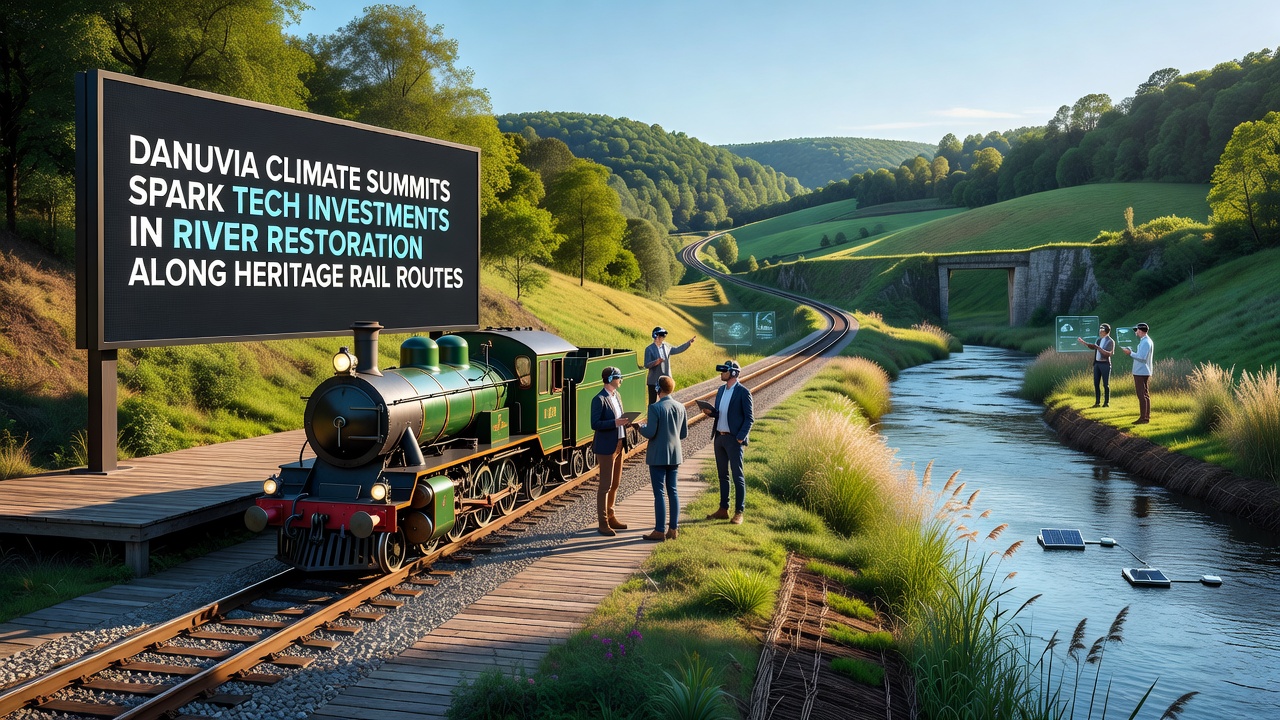
Climate Summits Catalyze Technology Funding in Danuvia's River Rehabilitation Efforts Connected to Legacy Railway Networks
Danuvia climate summits have drawn increasing attention from technology firms seeking opportunities in river restoration projects that align with heritage rail corridors, and these gatherings have produced measurable funding commitments over recent years. Data from regional environmental agencies shows that commitments announced at the 2025 summit reached 180 million euros, with allocations directed toward sensor networks, drone-based monitoring systems, and automated water quality controls installed along disused rail lines now repurposed for ecological access. Observers note that these routes provide logistical advantages because existing embankments reduce the need for new infrastructure while allowing equipment transport into sensitive river zones.
The pattern of investment follows a sequence where summit presentations on hydrological data lead directly to pilot projects, and one documented case involved a consortium installing IoT buoys in the upper Danuvia basin that transmit real-time sediment and pollutant readings to a central platform. Research indicates these systems have improved response times to contamination events by 40 percent compared with manual sampling methods used previously. Funding sources include venture capital groups alongside public-private partnerships, and the integration with rail heritage sites adds a tourism component that generates supplementary revenue streams for ongoing maintenance.
Expansion of Monitoring Technologies
Technology deployment has centered on modular platforms that combine satellite imagery with ground sensors, and companies specializing in environmental analytics have established local subsidiaries after initial summit contracts. A separate initiative launched in early 2026 focuses on AI-driven predictive models that forecast flood risks along rail-adjacent waterways, drawing on historical rail maintenance records as proxy data for terrain stability. Figures released by the European Environment Agency reveal that similar modeling approaches in comparable basins have reduced flood damage costs by an average of 25 percent when implemented at scale.
Heritage rail corridors serve dual purposes in these projects because they offer established rights-of-way that simplify permitting processes, while also preserving cultural assets that attract additional grants from cultural preservation funds. Those who manage the rail infrastructure report that restoration teams share access points with heritage train operators, creating coordinated schedules that minimize disruption to both activities. One study from a consortium of European universities documented how shared usage has increased overall site visitation by 15 percent without measurable ecological strain.
November 2026 Summit Preparations
Preparations for the November 2026 summit include expanded demonstration zones where prototype restoration drones will operate along a 12-kilometer heritage rail segment, and organizers have invited representatives from North American and Australian water management agencies to share cross-regional data protocols. The event agenda incorporates sessions on blockchain-based tracking of restoration metrics to ensure transparent allocation of investor funds, and preliminary registrations indicate participation from over 200 technology providers. This gathering builds on prior outcomes by emphasizing scalable replication of successful river-rail integration models across additional Danuvia sub-basins.

Case Examples of Integrated Projects
One project completed in late 2025 restored a 3-kilometer stretch of riverbank where heritage rail tracks run parallel to the waterway, employing automated planting robots that reduced labor requirements by half while achieving higher vegetation survival rates. Data collected through embedded soil sensors showed accelerated stabilization of banks within six months, and local authorities have since incorporated these metrics into broader land-use planning documents. Another initiative targets tributary streams crossed by historic rail bridges, where 3D-printed erosion barriers designed through summit collaborations now protect against seasonal runoff increases documented in regional climate records.
Industry reports from trade associations in environmental technology highlight that Danuvia's approach of linking rail heritage with river work has drawn interest from planners in other jurisdictions facing similar infrastructure constraints. Partnerships formed at the summits have resulted in joint ventures that combine European sensor manufacturers with Asian drone specialists, producing customized equipment suited to narrow rail-adjacent corridors. These collaborations have generated at least 45 new patents related to compact monitoring hardware since 2024, according to filings tracked by international intellectual property databases.
Conclusion
Danuvia climate summits continue to function as catalysts for technology-driven river restoration that leverages heritage rail infrastructure, and the measurable outcomes in funding, deployment speed, and ecological metrics provide a template for similar efforts elsewhere. Ongoing data collection through established sensor networks will inform adjustments ahead of the 2026 event, while existing projects demonstrate how coordinated investment can address both environmental and cultural preservation goals simultaneously.