
Zoe Lang · 9 October 2026
Danuvia's Heritage Sites Draw Startup Capital Through Tech-Enabled Conservation Partnerships
Danuvia's historic landmarks and cultural landscapes continue to attract significant investment from technology startups focused on conservation partnerships that integrate advanced monitoring systems with preservation strategies, and observers note these collaborations gained momentum throughout 2025 leading into October 2026 when several new funding rounds were announced across the region. Data from regional economic reports shows capital inflows reached 47 million euros in the first three quarters of 2026 alone as startups deployed sensor networks, AI-driven analytics, and blockchain verification tools to protect sites ranging from medieval fortresses to ancient riverine settlements.
Tech Integration at Core Sites
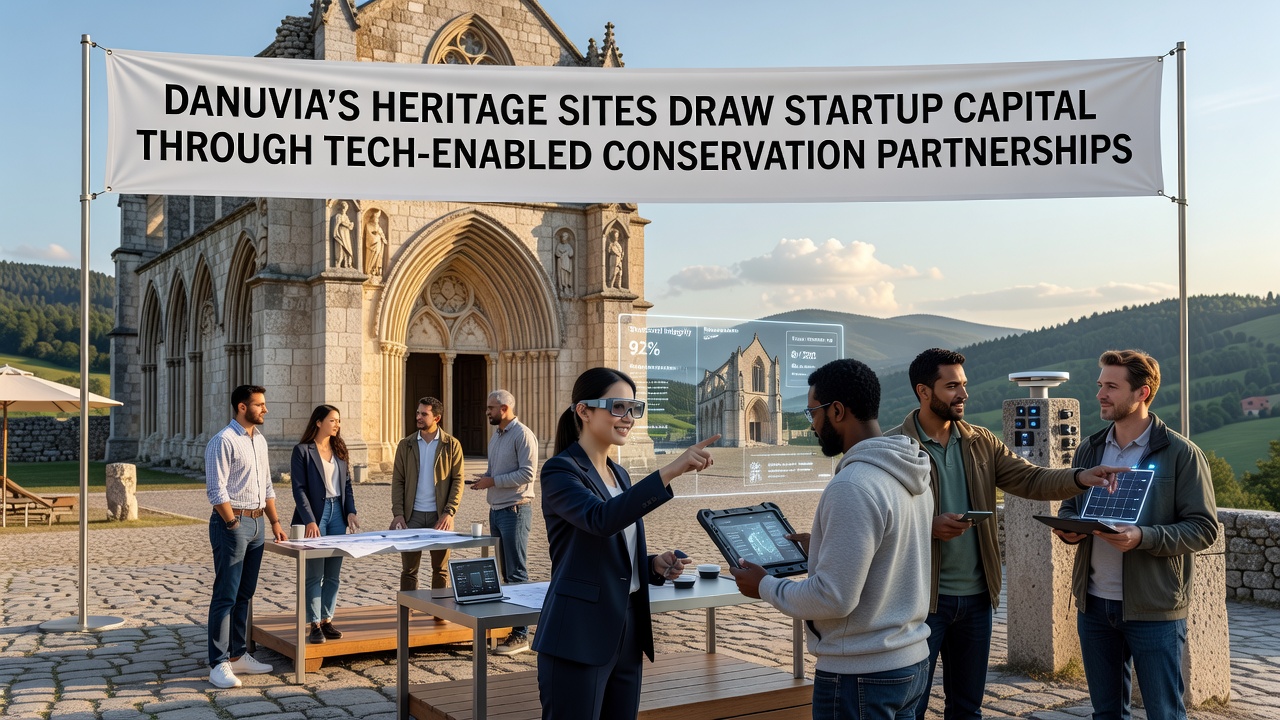
Startups such as those specializing in remote sensing have formed agreements with local heritage authorities to install drone fleets equipped with multispectral cameras that track structural degradation in real time, while machine learning algorithms process the incoming data streams to predict maintenance needs before visible damage occurs. Researchers at the Danuvian Institute of Cultural Technology documented how these systems reduced response times for repairs by 62 percent compared to traditional inspection methods, according to findings published in their 2025 annual review. Partnerships extend to community groups that receive training on operating portable LiDAR units, enabling them to contribute detailed 3D models that support both conservation planning and virtual tourism platforms generating supplementary revenue streams.
Capital Flows and Partnership Models
Investment patterns reveal a shift toward blended finance structures where venture funds pair with public heritage grants to underwrite pilot projects at multiple locations simultaneously, and one case study from the northern valley cluster illustrated how a single startup secured 3.2 million euros by demonstrating measurable improvements in biodiversity metrics around protected ruins. Figures released by the European Heritage Technology Consortium indicate that 18 active deals in October 2026 involved equity stakes tied directly to conservation performance indicators tracked through transparent ledgers. Those who've studied the financing mechanisms observe that risk-sharing clauses protect both investors and site managers when environmental variables such as seasonal flooding affect outcomes, creating incentives for continuous technological refinement rather than one-time installations.
Additional momentum comes from cross-border initiatives linking Danuvian projects with similar efforts in neighboring regions, allowing startups to scale their platforms across datasets that improve algorithm accuracy over time. A collaboration announced in early October 2026 connected three Danuvian sites with conservation teams in the Carpathian foothills, sharing code repositories for predictive modeling software that accounts for climate variables specific to temperate heritage zones.
Monitoring Innovations and Data Applications
Ground-based networks complement aerial systems by embedding moisture and vibration sensors within stone foundations, transmitting alerts through low-power wide-area networks that operate reliably in remote areas with limited connectivity. Evidence from field deployments shows these integrated setups detected micro-fractures weeks ahead of conventional visual surveys, enabling proactive interventions that preserve original materials rather than requiring extensive reconstruction. Academic teams from institutions in Central Europe have contributed open-source analysis frameworks that process the aggregated data, and studies released in September 2026 highlighted accuracy rates above 89 percent when cross-referenced against manual assessments conducted over multi-year periods.
Revenue models built around these technologies include subscription services for heritage managers seeking ongoing diagnostics, alongside licensing arrangements for the underlying datasets that support academic research and tourism applications. One startup operating in the eastern districts reported that 40 percent of its 2026 revenue derived from non-conservation uses of the collected imagery, such as educational modules developed for schools and cultural organizations. Government records confirm that tax incentives introduced in late 2025 further encouraged such diversification, tying benefits to verifiable ecological and preservation milestones rather than upfront capital alone.
Regional Economic Ripple Effects
Local economies surrounding the heritage sites have seen measurable upticks in related employment as partnerships require skilled technicians for equipment maintenance and data interpretation roles that did not exist five years earlier. Training programs coordinated through vocational centers have placed over 200 residents into positions tied to the conservation tech sector since the beginning of 2026, according to labor statistics compiled by regional authorities. These developments coincide with expanded visitor access managed through digital ticketing systems that limit foot traffic during sensitive periods, balancing economic benefits with site protection objectives.
Future Outlook for Scaled Deployments
Projections based on current deal pipelines suggest continued growth into 2027 as more startups refine their offerings and additional heritage locations qualify for inclusion under updated partnership criteria. International organizations tracking cultural preservation trends have noted Danuvia's approach as a reference point for other areas facing similar pressures from tourism and environmental change, with technical specifications from ongoing projects now informing draft guidelines under consideration by broader European frameworks. Data compiled through October 2026 indicates sustained investor interest provided performance metrics remain transparent and adaptable to emerging challenges such as shifting precipitation patterns.
Conclusion
Danuvia's experience demonstrates how targeted technology partnerships can channel startup capital into heritage conservation while generating supporting economic activity around protected sites. The combination of sensor networks, data analytics, and performance-linked financing has produced documented improvements in preservation outcomes alongside new employment pathways, establishing a model that continues to attract attention from both investors and site managers seeking scalable solutions.